1. Introduction
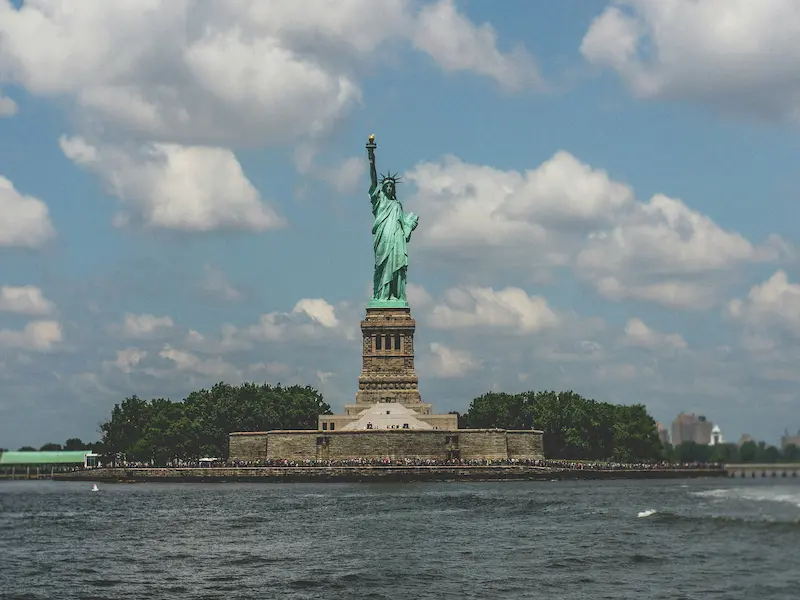
The Statue of Liberty is one of the most famous monuments in the world. It is located on Liberty Island in New York Harbor. The statue represents freedom, democracy, and hope, and it has welcomed millions of immigrants arriving in the United States.
2. History
- The statue was a gift from France to the United States in 1886.
- Designed by Frédéric Auguste Bartholdi, with the internal structure by Gustave Eiffel.
- It was built to celebrate friendship between France and the United States and to honor American independence.
3. Physical Features
- Height: 151 feet (statue), 305 feet including pedestal
- Material: Copper sheets over iron framework
- Appearance: A robed female figure holding a torch in her right hand and a tablet in her left with the date of American Independence (July 4, 1776).
- Crown: Visitors can climb to the crown for amazing views of New York City and the harbor.
4. Significance
- The statue is a symbol of freedom and hope.
- It welcomed immigrants arriving in the U.S. during the 19th and 20th centuries.
- It is recognized worldwide as a symbol of democracy and human rights.
5. Tourist Information
- Location: Liberty Island, New York City
- How to Visit: Accessible by ferry from Battery Park
- Things to Do:
- Explore the Statue of Liberty Museum
- Climb the pedestal and crown (tickets required)
- Enjoy views of Manhattan and the harbor
6. Interesting Facts
- The torch was replaced in 1986.
- The statue underwent restorations to preserve its copper surface.
- It has appeared in movies, art, and literature as a symbol of freedom.
7. Conclusion
The Statue of Liberty is not only a beautiful monument but also a powerful symbol of freedom and hope. Millions of people visit it every year, and it continues to inspire people around the world.